You can't amplify a reputation you haven't built yet.
The aesthetics industry is obsessed with content creation. But what happens when practitioners spend thousands promoting a business that hasn't yet established its first paying patients?
By Alexis Drake
Spend a few minutes on Instagram and you'd be forgiven for thinking that becoming a successful aesthetics practitioner requires an entirely separate qualification in content creation. There are endless recommendations about posting frequency, video hooks, influencer collaborations, personal branding and the importance of showing up consistently online. The message is difficult to escape: if you want patients, you'd better get comfortable in front of a camera.
For someone entering aesthetics from a clinical career, this can feel like an entirely new set of professional expectations. It's apparently no longer enough to develop the knowledge and competence required to deliver treatments safely. You must also become a presenter, videographer, copywriter and social media personality. And if that prospect feels overwhelming, there are plenty of people willing to take the problem off your hands. For a fee, naturally.
I recently worked with a doctor in the early stages of developing a private aesthetics practice. By the time we began examining the business, she'd already spent several thousand pounds on professional content days, influencer activity and social media management.
At that point, she'd performed only a handful of treatments, initially on friends. Despite the investment in marketing, she hadn't generated any paid bookings from the activity.
It was a striking illustration of something I think new practitioners need to understand: you can purchase visibility, but you cannot purchase an established reputation.
The business that looked busier than it was
I can understand why someone might make this investment. Social media provides a highly visible picture of what success in aesthetics is supposed to look like. Established clinics have polished photography, treatment videos, patient testimonials and confident practitioners explaining their services to the camera. It's tempting to believe that reproducing those characteristics will help reproduce the commercial results.
But there's an important difference between the marketing activity of an established practice and the priorities of someone who has barely begun treating patients.
An established clinic may have years of clinical experience, an existing patient base, repeat appointments, word-of-mouth referrals and a reputation within its local community. Its marketing can draw upon real patient experiences and a proposition that has already been tested in practice.
A new practitioner may still be developing their practical experience, understanding their intended patients and establishing the professional relationships that will support their early career. Replicating the appearance of an established clinic doesn't automatically reproduce the foundations upon which its success was built.
This is where marketing expenditure can become deceptive. A content day produces photographs and videos. A social media manager produces posts. An influencer collaboration may generate views, impressions and engagement. These are tangible outputs that make a business feel as though it's progressing, but none guarantees that suitable patients will book appointments.
And if the practitioner hasn't yet established who their prospective patients are, why they might choose them or what would give them confidence to proceed, producing more content may simply make an unproven proposition more visible.
Trust isn't a production expense
Medical aesthetics is an unusually trust-sensitive category. Patients are considering treatments that can affect their appearance and wellbeing, sometimes involving significant clinical risks. Their decisions should involve much more than whether they like a practitioner's Instagram feed.
They need confidence in the practitioner's competence, judgement, communication and approach to patient care. Marketing can help communicate these qualities, but it cannot substitute for them.
A professionally filmed video might introduce a practitioner to someone who has never heard of them. It might explain their qualifications or demonstrate their approach to consultations. Those are legitimate and potentially valuable functions. What it cannot do is create clinical experience that hasn't yet been acquired or establish a track record of patient satisfaction that doesn't yet exist.
For someone starting out, building credibility may mean prioritising further supervised experience where appropriate, developing relationships with established clinics, conducting thoughtful consultations and gradually building a reputation through genuine patient experiences.
It may also mean becoming known within a particular local community rather than trying to attract attention from thousands of people who live nowhere near the practice.
After all, a video viewed by 20,000 people isn't necessarily commercially valuable if almost none of those viewers are suitable prospective patients within a realistic travelling distance.
An audience is not a patient base. And engagement is not evidence of demand.
You don't need a production studio to have something worth saying
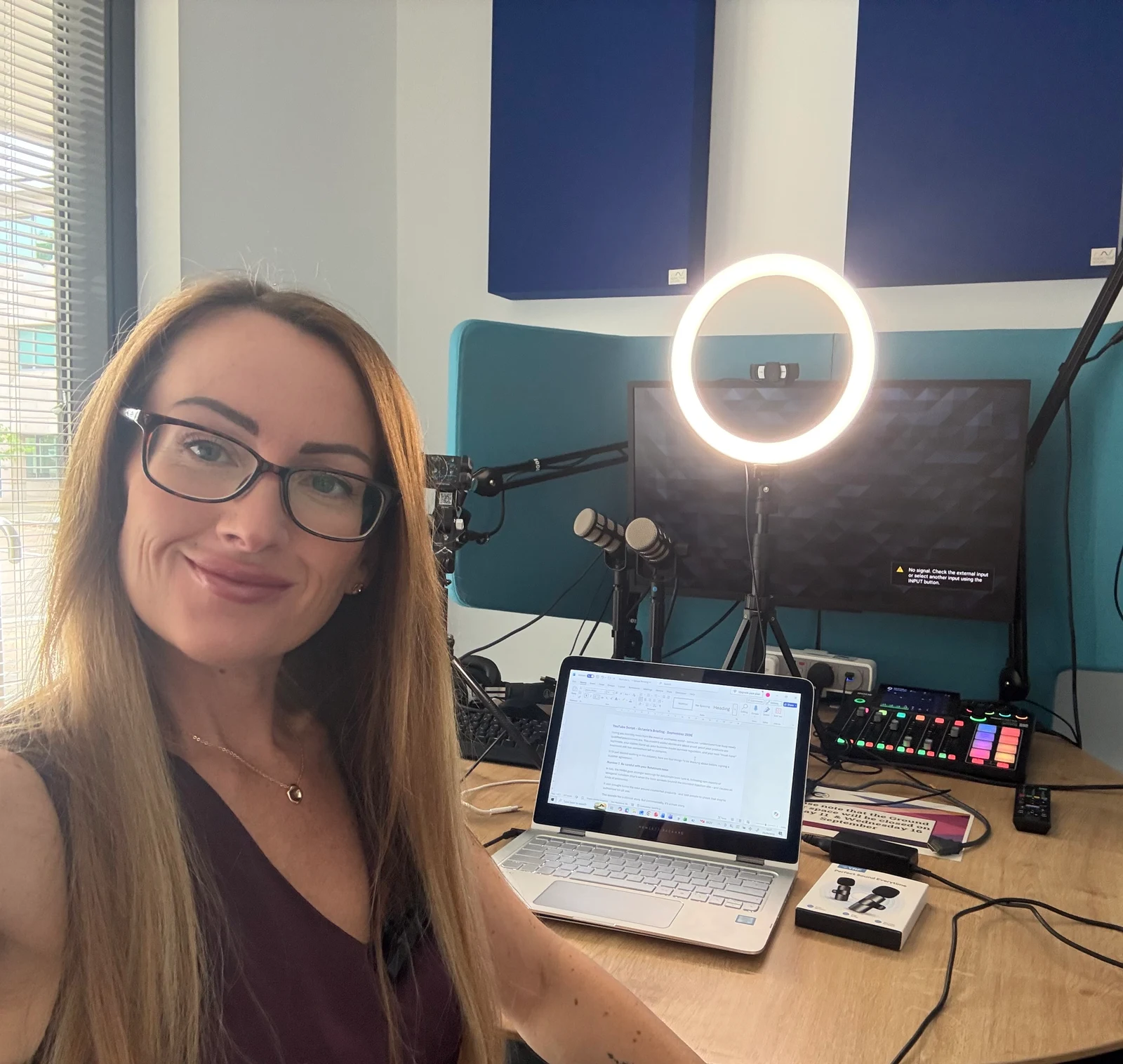
The photograph accompanying this article was taken while I was preparing content for Octavia's Revenge. My equipment consisted of a relatively inexpensive ring light, a clip-on microphone and my laptop. I was using a room available to me at a local university rather than paying for a professional production studio.
It wasn't glamorous, although I rather enjoyed having all the microphones and lighting equipment arranged around me. More importantly, it was entirely sufficient for what I wanted to achieve.
I'd already identified my audience, developed my proposition and decided what I wanted to communicate. The equipment simply helped me do it.
I'm not suggesting that professional photographers, videographers or social media specialists are unnecessary. Good creative work can make a meaningful difference when a business understands its audience and has a clear commercial objective.
But production quality should serve the message, not become a substitute for having one.
For a practitioner at the beginning of their journey, a straightforward introduction filmed on a phone may be entirely appropriate. So might a carefully written explanation of their professional background, a discussion of treatment suitability or an introduction to the clinic where they'll be practising.
The priority should be accuracy, relevance, professionalism and compliance with applicable advertising requirements, rather than imitating the production values of a much larger business.
And if a practitioner has limited clinical experience in aesthetics, the answer isn't to conceal that behind expensive branding. It's to communicate their credentials honestly while continuing to develop appropriate experience.
The diagnosis
There will absolutely be a time when investing in professional content and marketing support makes commercial sense. A practitioner with a clear treatment offering, suitable clinical capacity, an understanding of their target audience and evidence of patient demand may benefit considerably from improving their visibility.
But marketing investment should address an identifiable commercial problem, not simply make the business look more established.
The doctor whose experience prompted this article had invested substantially in promoting her practice before establishing a meaningful base of paying patients. The content was real, and so was the expenditure. What remained unproven was whether the underlying proposition could generate sustainable demand.
That's a much more important question than how polished the Instagram feed looks.
You can pay someone to produce your content, distribute it and put it in front of thousands of people. But you cannot simply purchase the clinical credibility, patient confidence and local reputation that make people willing to trust you with their treatment.
Marketing can help a reputation travel further. It cannot create the underlying evidence of that reputation on demand.
Strategy before spend. Always.
The client example has been anonymised and reflects one practitioner's early business experience. It should not be interpreted as evidence that professional content production or social media marketing is generally ineffective for new aesthetics practices.
About the author
Founder, Octavia's Revenge
Commercial, brand and marketing strategy for medical aesthetics businesses.
Keep reading
 Observations
Before you leave the NHS, do the maths.
Two conversations. Two very different ambitions. And one financial consideration that deserves considerably more attention.
Alexis Drake
 Observations
Frequent flyers: when another training course becomes the business plan
There's a pattern I'm beginning to recognise in medical aesthetics. Practitioners invest in clinical training, struggle to establish a paying patient base, and then decide that the next step towards growing their business is more training.
Alexis Drake
 Observations
Buying things for your aesthetics business isn't the same as building one
Eight minutes on Instagram, dozens of promises and a question every aspiring aesthetics practitioner should ask before reaching for their wallet.
Alexis Drake