Qualified four years ago. Still waiting to start.
An experienced NHS nurse, a one-day aesthetics course and four years of uncertainty. What happens when clinical training ends but the business journey hasn't really begun?
By Alexis Drake

At a recent aesthetics event, I got talking to a nurse whose story has stayed with me. She'd spent around 20 years working in the NHS, including caring for cancer patients from diagnosis through to the end of their lives. It was a career involving considerable clinical responsibility, emotional resilience and experience of supporting people through some of their most difficult moments.
Four years ago, she'd decided to explore medical aesthetics and completed a one-day training course. Yet despite her enthusiasm for the subject and her extensive healthcare experience, she hadn't gone on to establish a practice. Four years later, she was still trying to work out how to begin.
As we talked, it became apparent that the difficulty wasn't simply about learning another clinical skill. She was contemplating a transition into an unfamiliar professional environment, one in which the structures she'd relied upon throughout her NHS career would no longer provide the same direction. She had questions about finding patients, setting prices, promoting her services and building a practice alongside a full-time job and family commitments. Instagram, in particular, felt like an alien world.
I found myself thinking about the extraordinary contrast between her experience as a healthcare professional and the uncertainty she felt about taking this next step. Here was someone who had spent two decades caring for patients, yet the prospect of attracting her own patients and asking them to pay privately for treatment presented a completely different challenge.
From clinical development to commercial independence
For many healthcare professionals, clinical development takes place within established systems. There are defined roles, professional standards, competency frameworks, supervision and opportunities to learn through experience. Although individual career paths vary considerably, practitioners are generally working within an infrastructure that supports the delivery of care and provides some direction for professional progression.
Moving into independent private practice introduces a different set of responsibilities. In addition to establishing the clinical competence, governance arrangements and practical safeguards appropriate to the treatments being offered, practitioners must make decisions about the commercial foundations of their business.
They need to establish where they'll practise, which services they'll offer and whether there's sufficient demand in their chosen location. They must understand what those services will cost to deliver, how to price them sustainably and how many patients they'll need to make the venture worthwhile. They also need to consider how prospective patients will discover them, what will give those patients confidence in their expertise and how the business will fit around their existing commitments.
For someone who has spent their career in an employed clinical environment, these may be entirely new areas of responsibility. A practitioner can have substantial experience of caring for patients without having previously needed to find those patients, communicate a commercial proposition or manage the financial risks associated with running a business.
This distinction matters because learning how to deliver a treatment and learning how to build a viable business around it are two different disciplines.
A training course may develop a practitioner's knowledge and technical skills, although whether it establishes sufficient competence to practise independently will depend on the treatment, the quality and extent of training, the individual's experience and the relevant professional requirements. Even where appropriate clinical competence has been established, however, that doesn't automatically provide the commercial knowledge needed to develop a sustainable practice.
The certificate and the business plan serve very different purposes.
When the challenge is more than marketing
One aspect of our conversation particularly interested me. The nurse wasn't simply looking for advice on how to attract more Instagram followers or create better social media content. She was grappling with a much broader change in professional identity.
For approximately 20 years, she'd been an NHS nurse. Now she was considering becoming an independent practitioner who would need to communicate her value, attract patients and charge directly for her services. That represents a significant psychological as well as commercial transition, particularly for somebody whose professional identity has developed within a publicly funded healthcare system.
Within the NHS, patients generally encounter clinicians through established healthcare pathways. In private practice, patients must first discover a practitioner, understand the services available, develop confidence in their expertise and decide whether the proposed treatment represents appropriate value for them.
That requires a different kind of professional visibility, and I can understand why it might feel uncomfortable to someone who has never needed to promote their own services.
But I also think there's an important misconception worth challenging. Marketing yourself doesn't have to mean becoming somebody else. It doesn't require an extroverted Instagram persona, constant self-promotion or an attempt to imitate whichever clinic appears most successful online.
Good marketing begins with understanding the people you want to serve, the services you're appropriately qualified to provide and the reasons patients might choose you. From there, it's about communicating your proposition clearly, responsibly and through channels that make sense for your audience.
A practitioner who feels uncomfortable with social media doesn't necessarily have a marketing problem. They may simply need a clearer understanding of their market, their proposition and the different ways of reaching prospective patients.
That's a strategic question before it's a social media question.
Four years between qualification and practice
I don't know what might have happened if this nurse had received more structured commercial support after her initial training. Perhaps she'd have established a small practice alongside her NHS role, gradually developing her experience and patient base. Equally, she might have concluded that the investment, responsibilities and practical demands of private practice weren't right for her circumstances.
Either outcome could have represented a sensible, informed decision.
What struck me was the length of time she'd spent contemplating the opportunity without finding a clear way forward. Four years had passed since her initial training, yet she was still wrestling with many of the questions that arise at the very beginning of a business venture.
It made me wonder how many other healthcare professionals find themselves in a similar position. I don't have evidence to suggest how widespread this experience is, but the conversation raised a question I think deserves further investigation.
When practitioners complete their aesthetics training but don't progress into practice, what prevents them from taking the next step?
The reasons are likely to vary. Some may need further clinical training or supervised experience. Others may encounter financial constraints, limited time, unsuitable premises or concerns about professional responsibilities. For some, the difficulty may lie in understanding the market opportunity, developing confidence in their commercial proposition or knowing how to organise the practical steps involved in starting a business.
And for others, deciding not to proceed may be entirely appropriate.
The important point is that completing a qualification doesn't necessarily mean someone is ready, either clinically or commercially, to establish an independent practice. Nor should the absence of a functioning business automatically be interpreted as a lack of ambition or ability.
What happens after the classroom?
I think there's an opportunity for medical aesthetics training providers to take a greater interest in what happens to practitioners after they complete their courses.
Clinical education, professional competence and patient safety must remain fundamental. However, for programmes aimed at practitioners who intend to establish private businesses, there's also value in helping learners understand the commercial realities they'll encounter once their training ends.
That doesn't necessarily mean turning every clinical course into a business qualification. It might mean providing a structured introduction to the decisions involved in establishing a practice, helping learners understand what additional support they'll need and giving them a realistic framework for evaluating whether, when and how to proceed.
For example, practitioners could be encouraged to define what they want their business to achieve. Are they seeking supplementary income alongside NHS employment, a portfolio career or the eventual development of a substantial private practice? Each ambition has different implications for investment, capacity and financial planning.
They could also explore the market they intend to enter, the services they might appropriately offer, the patients they hope to serve and the economics of delivering those treatments. Practical considerations such as premises, insurance, governance, further supervised experience, marketing and patient acquisition could then be evaluated within the context of a defined commercial objective.
Importantly, this support shouldn't assume that every learner ought to launch immediately. Sometimes the most valuable outcome of a structured planning process is recognising that further experience is needed, that the proposed business model requires adjustment or that the timing simply isn't right.
The purpose isn't to encourage practitioners into private practice at any cost. It's to help them make informed decisions about an opportunity that may require substantial investment of money, time and professional commitment.
For training providers, there's also an interesting question about how educational success might be evaluated beyond course completion. Understanding whether graduates subsequently enter practice, what obstacles they encounter and what support they find valuable could provide useful insight into how programmes prepare learners for their intended careers.
It's a conversation I'd be interested to see the sector explore more fully.
The diagnosis
A qualification may open the door to a new career, but it doesn't automatically provide the roadmap for getting there.
For the nurse I met, the challenge wasn't simply learning a new treatment. It was understanding how to translate her professional experience, initial aesthetics training and ambition for something different into a practical, achievable next step.
Her story illustrates a distinction I think the industry should pay more attention to: clinical development and commercial readiness are connected, but they aren't interchangeable. Supporting practitioners with one doesn't automatically equip them for the other.
And while I can't know whether a different approach would have changed this particular nurse's journey, I do think there's considerable value in helping aspiring practitioners answer the question that follows so many new qualifications.
Now what?
Strategy before spend. Always.
This article reflects one anonymised conversation at an industry event. It is not evidence of how frequently practitioners experience similar difficulties, nor does completion of a one-day course necessarily establish competence to practise independently.
About the author
Founder, Octavia's Revenge
Commercial, brand and marketing strategy for medical aesthetics businesses.
Keep reading
 Observations
Before you leave the NHS, do the maths.
Two conversations. Two very different ambitions. And one financial consideration that deserves considerably more attention.
Alexis Drake
 Observations
Frequent flyers: when another training course becomes the business plan
There's a pattern I'm beginning to recognise in medical aesthetics. Practitioners invest in clinical training, struggle to establish a paying patient base, and then decide that the next step towards growing their business is more training.
Alexis Drake
 Observations
Buying things for your aesthetics business isn't the same as building one
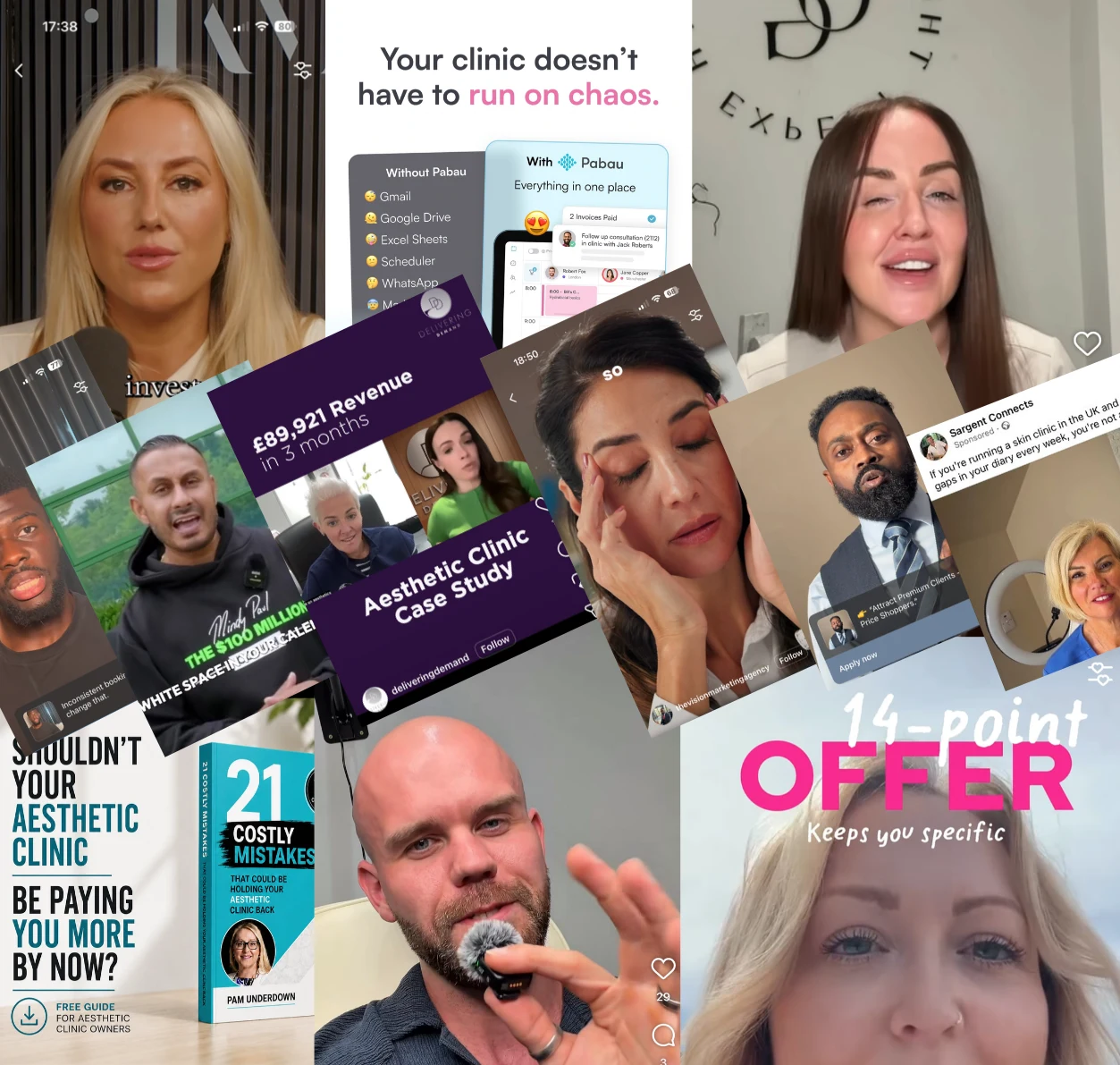
Eight minutes on Instagram, dozens of promises and a question every aspiring aesthetics practitioner should ask before reaching for their wallet.
Alexis Drake